How to Spot Poor Workmanship (and Prevent It Before It Happens)
When you hire someone to work on your home whether it’s to fix a leaking tap, hang shelves, or renovate your kitchen you expect the job to be done right. Unfortunately, not all handymen or contractors live up to that expectation. So How to Spot Poor Workmanship
handyman.sg
12/22/2025
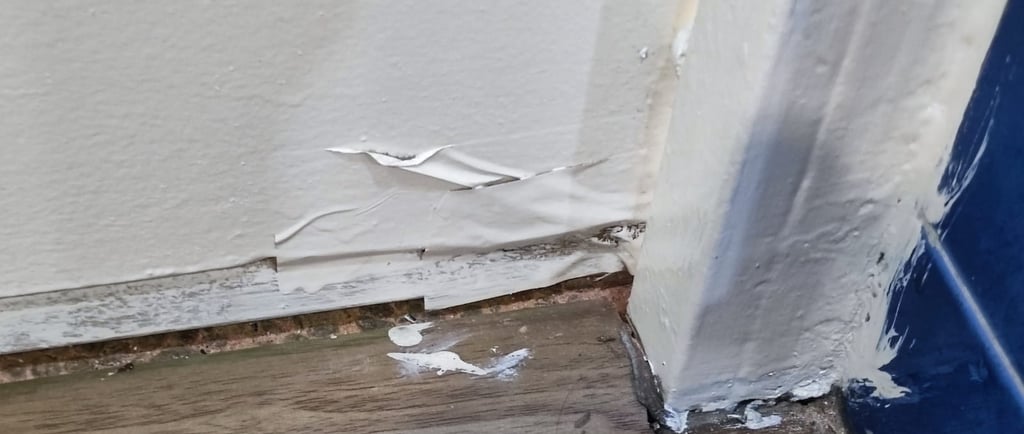
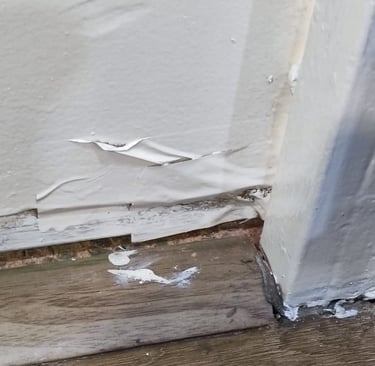
🧰 How to Spot Poor Workmanship
(and Prevent It Before It Happens)
When you hire someone to work on your home — whether it’s to fix a leaking tap, hang shelves, or renovate your kitchen you expect the job to be done right. Unfortunately, not all handymen or contractors live up to that expectation.
Poor workmanship doesn’t just ruin the look of your home it can create safety hazards, reduce the value of your property, and cost you more in repairs later on.
The truth is: spotting substandard work is easy after the damage is done. The real skill lies in knowing how to prevent it before it happens.
In this post, we’ll walk you through:
The tell-tale signs of poor workmanship
What to look out for during and after the job
How to identify a reliable professional before hiring
By the end, you’ll feel more confident about who to trust and understand why hiring a qualified handyman can save both your money and peace of mind.
🔍 What Exactly Is “Poor Workmanship”?
Simply put, poor workmanship happens when a job is not performed to acceptable standards. It’s not just about “ugly” finishes it’s about cut corners, lack of precision, and disregard for safety.
Here are a few real-life examples relevant to Singapore homes:
Uneven tiling or crooked paint lines after a renovation
Loose wall shelves or TV brackets that feel unstable
Silicone seals in bathrooms that mould quickly or peel away
Poor wiring causing flickering lights or tripped switches
Doors and windows that don’t close properly
Fixtures installed without proper anchors especially in concrete HDB walls
In many cases, these problems look small at first but lead to costly rework and safety issues over time.
🚨 Common Signs of Poor Workmanship
Let’s start with how to recognise it during and after the project. These are red flags that the job may not meet professional standards.
1. Uneven or Misaligned Finishes
A well-done job should always look right. Check for:
Uneven paint coverage or visible brush marks.
Crooked cabinet doors or tiling patterns.
Unevenly cut or poorly joined materials (especially woodwork or plaster edges).
Tip: Professionals use measuring tools, laser levels, and finish checks not “eyeballing” methods.
2. Poor Surface Preparation
If paint peels off easily or grout cracks within months, it’s often because the surface wasn’t properly prepared.
Signs include:
Paint applied on dirty or damp walls.
Drilled areas left unsealed, causing moisture issues later.
Fixtures mounted without checking wall material or load capacity.
Professionals know: preparation takes longer than the actual installation and it’s what ensures durability.
3. Messy or Unsafe Workmanship
A reliable handyman’s workspace stays organised and safe. Warning signs include:
Cables and debris lying around.
Tools scattered unsafely.
Workers not using protective gear (gloves, eye protection, etc.).
Ignoring your property’s cleanliness or protection (no covers on furniture).
Unprofessional work habits often reflect unprofessional results.
4. Inaccurate Measurements
In home improvement, one millimetre matters.
Signs of poor measurement include:
Furniture too tight for the space.
Wall shelves not evenly spaced.
Brackets or hooks that aren’t level.
At Handyman Singapore, for example, our technicians double-check dimensions and use levelling tools to guarantee precision an essential habit of professionals.
5. Visible Shortcuts
If you can see shortcuts imagine what’s hidden beneath.
Look out for:
Overuse of caulk or sealant to “cover up” poor fits.
Misaligned screw holes filled with putty.
Loose fixtures that weren’t properly anchored.
Good work looks neat even before finishing because it’s built correctly from the inside out.
6. Lack of Communication
One of the clearest signs of a poor-quality contractor is unclear or evasive communication.
Red flags include:
Vague answers to questions about timelines, materials, or warranty.
No written quote or job scope.
Not explaining what issues they find onsite.
Reliable professionals offer transparency, walk you through their process, and ensure you understand the work before they begin.
🧱 The Hidden Costs of Poor Workmanship
Some homeowners hire freelancers or unverified contractors to “save money.” But those initial savings disappear the moment you need repairs or replacements.
Here’s how poor workmanship costs you more:
Fixing errors: Paying twice for the same job.
Safety hazards: Electrical faults or water leakage can cause major damage.
Time loss: Repeat visits, incomplete work, or unresponsive handymen delay your plans.
Aesthetics: Uneven finishes or visible flaws can lower property value (especially before resale).
Sometimes, paying slightly more for a professional who gets it right the first time is actually cheaper in the long run.
🔧 How to Prevent Poor Workmanship Before You Hire
Here’s where homeowners can take control. Prevention starts before any drilling, painting, or wiring begins.
1. Do a Quick Background Check
Before hiring, always verify the handyman’s credibility:
Look for reviews and ratings online (Google, Facebook, or your local listings).
Check if they have a website or company portfolio like www.handyman.sg.
Verify how long they’ve been serving customers in Singapore.
Ask for photos of previous work, especially similar jobs.
Professionals are proud to show their work — amateurs often make excuses.
2. Ask About Process and Tools
The right tools say a lot about a person’s workmanship.
Ask questions like:
“What type of anchors do you use for concrete walls?”
“How do you ensure tile alignment or level fixtures?”
“Do you test your installations after completion?”
A professional will confidently explain their process; a poor-quality freelancer may give vague or dismissive answers.
3. Request a Detailed Quote
Always insist on a detailed quotation not a one-line text like “Shelving install = $80.”
A good quote should specify:
Scope of work
Materials used
Expected completion time
Warranty terms (if applicable)
Transparent pricing prevents hidden charges and ensures both sides share the same expectations.
4. Inspect During the Job
Don’t hesitate to check progress midway through.
Is the workspace tidy?
Are measurements being verified?
Does the installation look level and solid?
Professionals appreciate engaged customers. Poor tradesmen may become defensive another red flag.
5. Look for Guarantees or After-Service Support
Serious handymen stand behind their work.
Ask if they offer:
Warranty or workmanship guarantees (e.g. 30–90 days).
After-service checks or adjustments if something isn’t right.
At Handyman Singapore, for instance, we back every job with follow-up support because quality doesn’t end when the invoice is signed.
6. Trust Your Gut
Professionalism is easy to sense punctuality, communication, and preparedness matter.
If a handyman looks disorganised, gives incomplete answers, or arrives without the right tools, it’s better to say “no, thank you” early on.
Quality service always comes with professionalism not excuses.
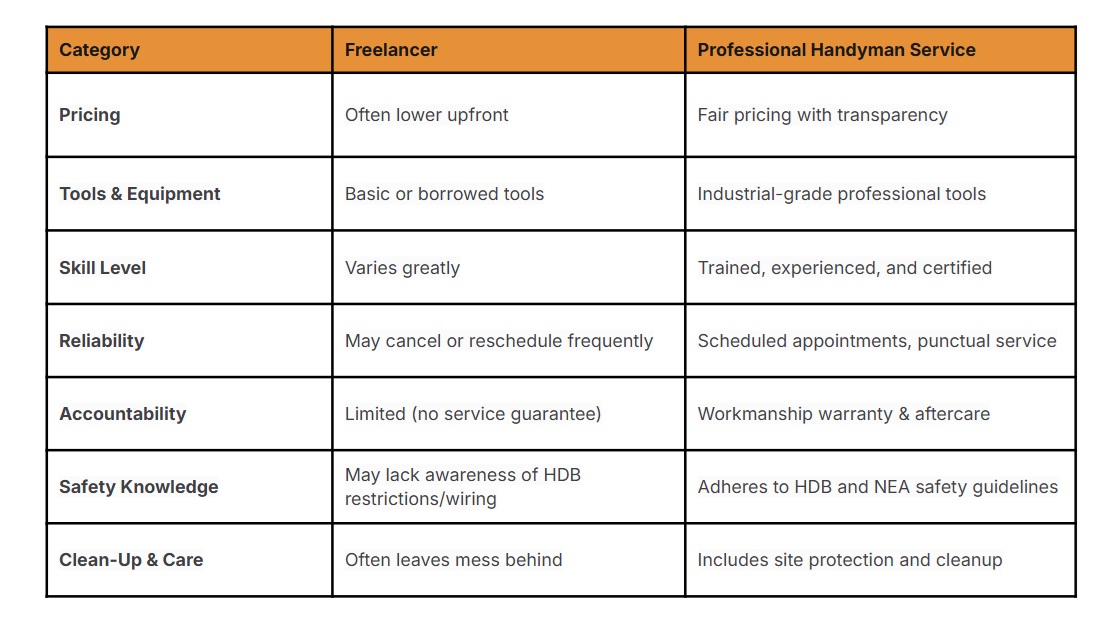
🧤 Freelancer vs. Professional Handyman: What’s the Difference?
In Singapore, home improvement jobs range from one-man freelancers to teams of experienced technicians.
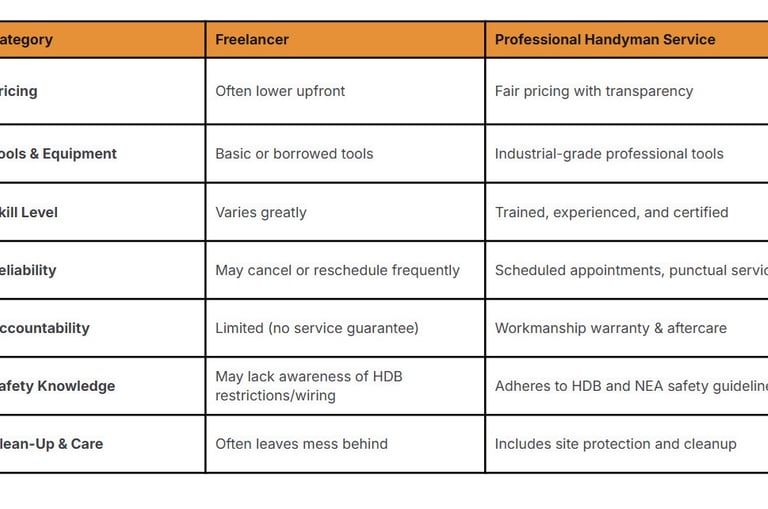
Here’s how they differ, and why it matters:
⚖️ Real-World Example: The Cost of “Cheap Work”
One client recently shared her experience:
“I hired someone from an online ad to install two shelves for only $40. Within a week, both came loose and damaged the wall. When I contacted him, he stopped replying. I had to call a professional handyman to fix the wall, refill the holes, and re-mount the shelves it cost over $150 in the end.”
This story is all too common fast, cheap, and careless work often ends up more expensive than hiring a reliable handyman from the start.
🛠️ The Professional Standard: What Quality Work Looks Like
When workmanship is good, you’ll notice it immediately everything feels right.
Here’s what true professionals deliver:
Clean-cut edges and level finishes.
Secure fixtures that don’t wobble or loosen.
Smooth paint surfaces and even colour.
Neat wiring and concealed cabling.
Clear communication and transparent billing.
Respect for your home tidy workspace and proper cleanup.
That’s the standard we uphold at www.handyman.sg because professionalism shows in the smallest details.
🌈 Final Thoughts: Quality Over Cost
When it comes to improving or maintaining your home, quality workmanship is not a luxury it’s a foundation.
Whether you’re mounting a TV, repairing walls, or preparing your house for renovation, choose a handyman who values expertise, transparency, and pride in their craft.
Remember:
A cheap job costs twice once when it’s done, and again when it has to be redone.
Choose reliability. Choose professionalism. Choose Handyman Singapore your trusted partner for quality home solutions.
🔧 Book Your Trusted Handyman in Singapore
If you want reliable service done right the first time, visit www.handyman.sg.
From installations to repairs and painting, our team delivers workmanship you can depend on every time.
💡 Frequently Asked Questions: How to Spot (and Prevent) Poor Workmanship
1. What are the most common "red flags" in tiling and flooring work?
Answer: The first things to look for are lippage (uneven tile heights) and irregular grout lines. If you walk across a floor and feel edges catching your feet, or if the grout lines aren't perfectly straight, the tiles were laid poorly. Another trick is the "hollow test" tap on the tiles with a coin; a hollow sound means there isn't enough adhesive underneath, which will lead to cracking or popping later / in future.
2. How can I tell if my electrical or plumbing work was done by an amateur?
Answer: Look at the "hidden" areas. For electrical, open your DB (Distribution Board) box; the wiring should be neatly bundled and labelled, not a "spaghetti mess." For plumbing, check for moisture around joints or slow drainage. A common sign of poor workmanship is using excessive silicon sealant to "hide" gaps in pipes instead of using the correct fittings.
3. Why is "cutting-in" a good indicator of a professional paint job?
Answer: "Cutting-in" refers to the edges where the wall meets the ceiling, floor, or electrical outlets. A poor painter will have wavy lines, paint smudges on your light switches, or "holidays" (missed spots). A professional from www.handyman.sg uses steady hands or high-quality painter's tape to ensure these lines are razor-sharp and the finish is uniform.
4. Is it normal for built-in cabinets or wardrobes to have gaps against the wall?
Answer: While no wall is perfectly straight, a professional carpenter will use "fillers" or scribing techniques to ensure your built-ins look seamless. If you see large, visible gaps or if the doors don't align perfectly when closed, it indicates poor measurement and rushed installation. Always check that hinges are tightened and drawers slide smoothly without grinding.
5. How can I prevent poor workmanship before the project even starts?
Answer: The best prevention is a clear contract and a reputable provider.
Ask for a detailed quote: A vague quote like "Electrical work is $500" is a red flag. It should specify the number of points and materials used.
Check local reviews: Look for recent Singapore-based testimonials.
Ask about the warranty: Reputable companies like www.Handyman.sg stand by their work. If a contractor is hesitant to offer a service warranty, they likely don't trust their own workmanship.
SERVICES
Expert handyman & renovation services for homes, offices, and factories.
Contact
📞 Handyman Services: +65 8336 6682
✉️ Email: hello@handyman.sg | aaron@handyman.sg
About US: www.handyman.sg is proudly and exclusively owned and operated by Arctic Breeze Engineering. We maintain no affiliation with third-party listing platforms or independent 'Mr. Handyman' entities
www.handyman.sg
Owned and operated by:
Arctic Breeze Engineering
71 Woodlands Ave 10, #05-16 Woodlands Industrial Xchange, Singapore 737743
**Sister Company**
Reno Guys Pte Ltd
71 Woodlands Ave 10, #07-10 Woodlands Industrial Xchange, Singapore 737743
BUSINESS / FACTORY OFFICE ADDRESS
Contact
📞 Reno Guys / Office: +65 6993 8888
✉️ Email: aaron@renoguys.com.sg
🌐 Website: www.renoguys.com.sg